From Cherry to Cup: Natural, Washed and Honey Processing Explained
How does a coffee cherry become a roasted bean? Learn how natural, washed and honey processing work, and how each method shapes the flavour in your cup.
In this article
Every coffee bean begins life as the seed of a bright red fruit. Between the moment that fruit is picked and the moment you take your first sip, it goes through a journey that shapes its flavour as much as the soil, the altitude or the roast. One of the most important steps on that journey is processing: the way the fruit is removed and the seed is dried.
You may have noticed words like "natural", "washed" or "honey" on a bag of coffee. They describe the processing method, and they're one of the best clues to how that coffee will taste. Here's how each one works.
Inside a coffee cherry
To understand processing, it helps to know what's inside the fruit. A ripe coffee cherry has several layers:
- The skin, a thin outer layer that turns red or yellow when ripe.
- The pulp, a sweet, juicy layer of fruit.
- The mucilage, a sticky, sugary coating around the seeds.
- The parchment, a papery protective shell.
- The silver skin, a delicate film that clings to the seed.
- The seeds, usually two per cherry, sitting flat sides together. These are the coffee beans.
Occasionally a cherry contains just one round seed, known as a peaberry.
It starts with the harvest
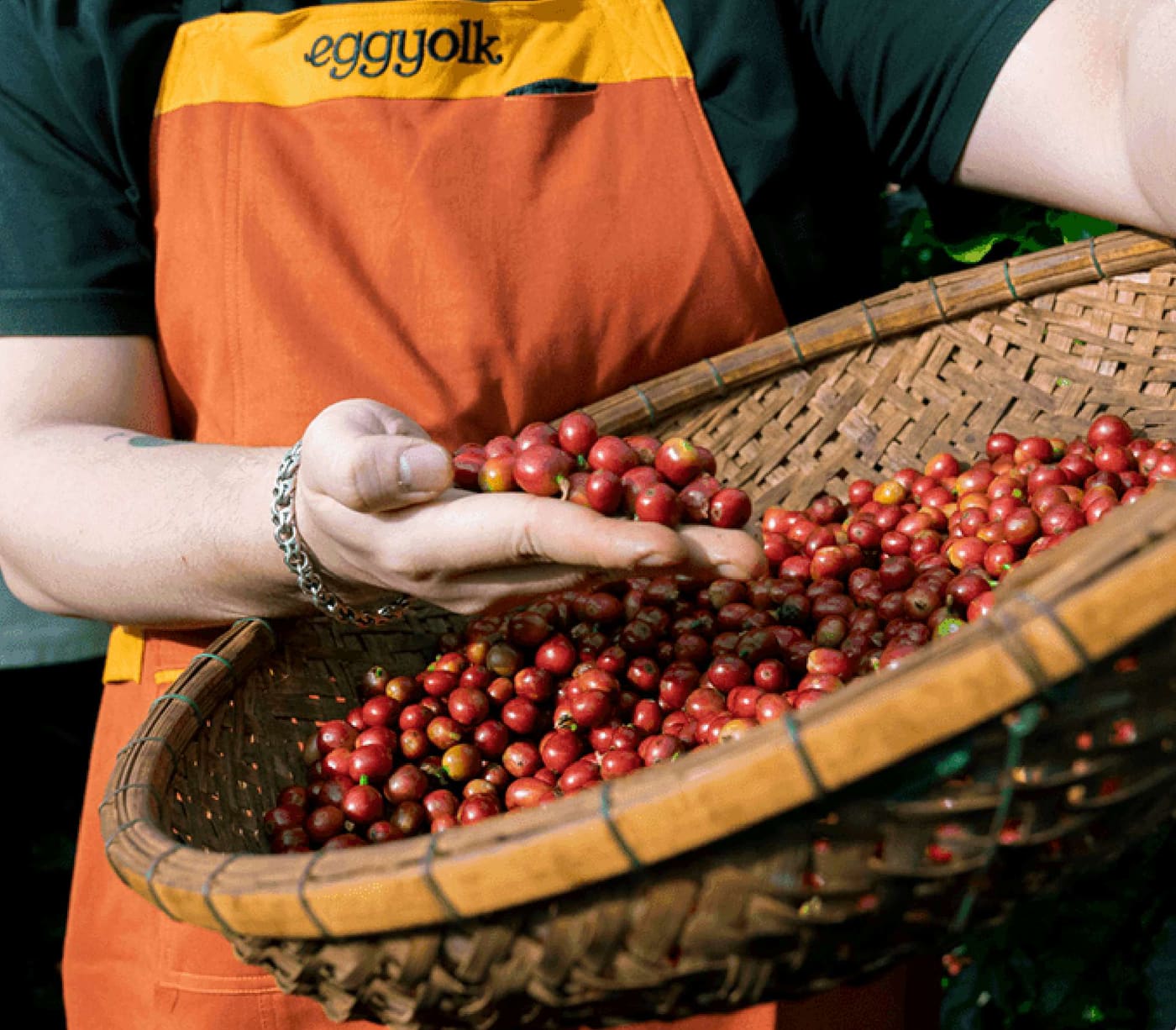
Coffee cherries on the same branch don't all ripen at once. The best farms pick selectively, by hand, choosing only the ripe red cherries and returning to each tree several times during the season. Others strip whole branches at once, which is faster but mixes ripe and unripe fruit. Since unripe cherries taste sour and astringent, careful picking is the first step towards a sweet, balanced cup.
Picking by hand is slow, skilled work. Pickers learn to judge ripeness by colour and feel, moving through the rows with baskets on their hips and returning to the same trees again and again as more cherries ripen. It's one of the most labour-intensive stages of the whole journey, and one more reason great coffee deserves to be savoured.
Once picked, the cherries must be processed quickly. The goal of every method is the same: separate the seed from the fruit and dry it down to a moisture level of roughly 10 to 12 percent, so it can be stored and shipped safely. How that happens makes all the difference.
Natural (dry) process
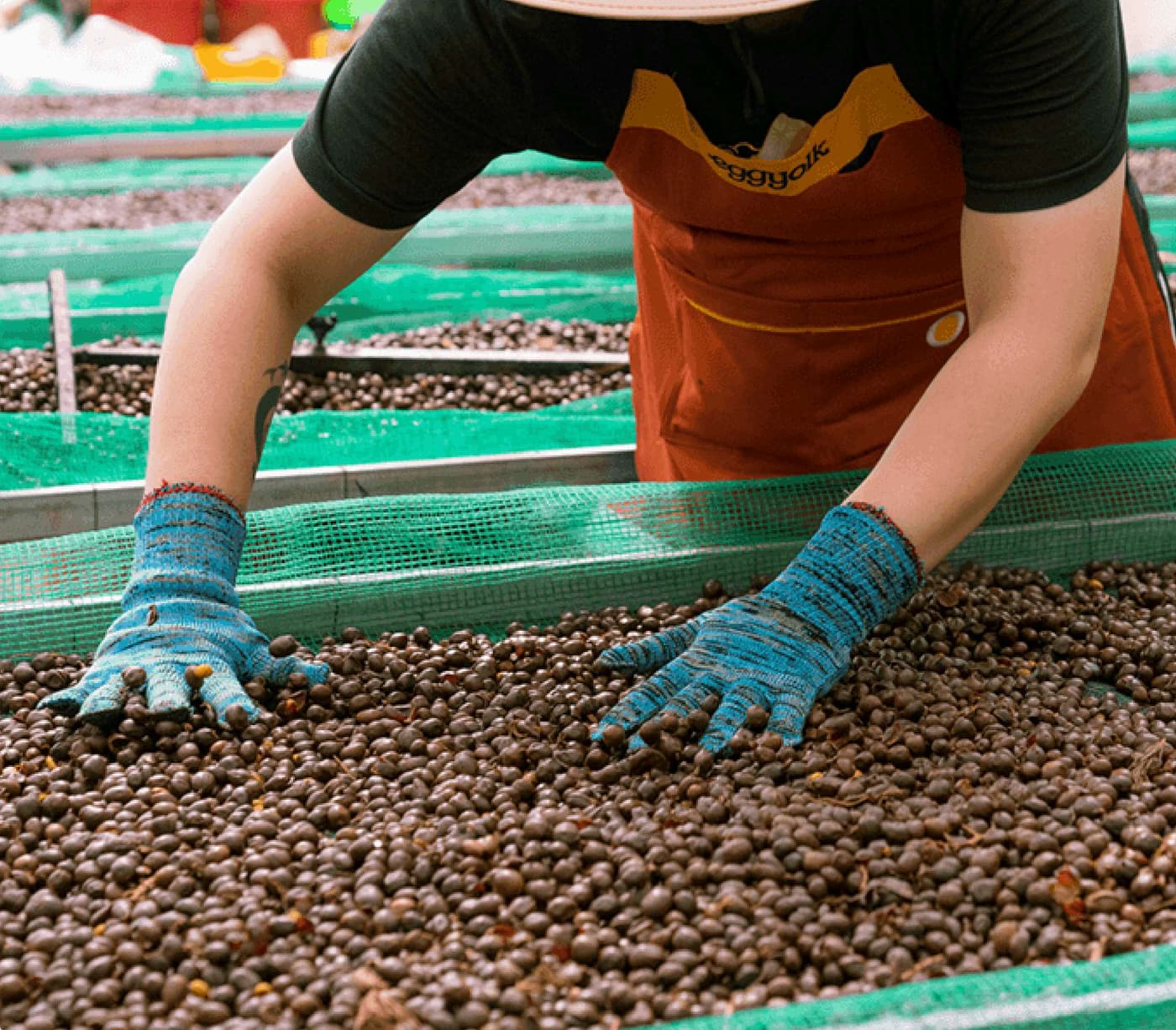
The natural process is the oldest and simplest method. Whole cherries are spread out to dry in the sun, either on patios or on raised beds, which let air circulate underneath. Workers turn them regularly to dry them evenly and prevent mould. After several weeks, the cherries shrivel into dark, raisin-like husks, which are then removed to reveal the dried beans.
Because the seed dries inside the whole fruit, it absorbs more of the fruit's sugars and flavours. Natural coffees tend to be:
- fruity, sometimes with notes of berries, tropical fruit or wine
- sweet and full-bodied
- lower in acidity than washed coffees
Natural processing needs little water, which makes it practical in many regions. It does require careful attention, though: uneven drying or over-fermentation can create harsh or overly funky flavours.
Washed (wet) process
In the washed process, the skin and pulp are removed by machine soon after picking. The seeds, still coated in sticky mucilage, are then left to ferment in tanks of water, usually for somewhere between half a day and two days. This natural fermentation breaks down the mucilage, which is then washed away with clean water. Finally, the beans dry in their parchment.
Removing the fruit before drying gives washed coffees a very different personality:
- clean and clear, with distinct flavours
- bright, lively acidity
- a lighter, more tea-like body
Because the fruit isn't influencing the bean, washed coffees often express the character of their origin and variety more transparently. The trade-off is that the method uses much more water and equipment.
Honey process
The honey process sits between natural and washed. The skin and pulp are removed, but some or all of the sticky mucilage is left on the bean as it dries. Despite the name, no honey is added. The term refers to the sticky, honey-like texture of the mucilage during drying.
Producers often describe honey coffees by colour, depending on how much mucilage is left and how the beans are dried:
- Yellow honey keeps the least mucilage and dries fastest, producing a cleaner cup.
- Red honey keeps more and dries more slowly, adding sweetness and body.
- Black honey keeps the most, often drying slowly in shade, for the richest, fruitiest results.
Honey-processed coffees usually combine the sweetness and body of naturals with some of the clarity of washed coffees.
Other methods you might see
Some regions use their own techniques. In parts of Indonesia, wet-hulled processing removes the parchment while the beans are still moist, creating earthy, heavy-bodied coffees. Adventurous producers are also experimenting with controlled fermentations, such as anaerobic processing in sealed tanks, which can produce bold and unusual flavours.
After drying: from farm to roaster
Once dried, the beans rest for a while to stabilise. Then the parchment or dried husk is removed in a step called hulling. The resulting green coffee is sorted by size and density, checked for defects, graded and packed for export or local roasting. Only after roasting does it develop the familiar brown colour and aroma we know. Green coffee is surprisingly stable and, stored well, keeps its quality for months, whereas roasted coffee is at its best within weeks.
Reading your coffee bag
The process listed on a bag is a helpful flavour guide. Our own beans are a good example. Our Arabica Specialty and Robusta Morning Brew are both natural-processed, which gives the Specialty its tropical notes of guava, passion fruit and pineapple, and the Morning Brew its ripe-fruit undertones. Our Arabica House Blend combines honey and washed coffees for a fruity, honeyed sweetness balanced by clarity.
Next time you open a bag of coffee, check the processing method, then taste with it in mind. You might start to notice the fruit, the brightness or the sweetness, and appreciate the many hands that shaped your cup long before it reached you.