Coffee Roast Levels Explained: Light, Medium and Dark
What's the difference between light, medium and dark roast coffee? Learn how roasting changes flavour, acidity, body and caffeine, and which roast suits your brewing method.
In this article
Before it's roasted, coffee doesn't look or smell anything like the coffee we know. Green coffee beans are hard, pale and smell faintly grassy, like dried peas or hay. Roasting is the step that transforms them, unlocking hundreds of aromatic compounds and creating the flavours we love, from bright citrus to deep dark chocolate.
How long and how hot the beans are roasted, known as the roast level, has a huge influence on the taste of your cup. Understanding the difference between light, medium and dark roasts will help you choose coffee you'll genuinely enjoy and brew it the right way.
What happens during roasting?
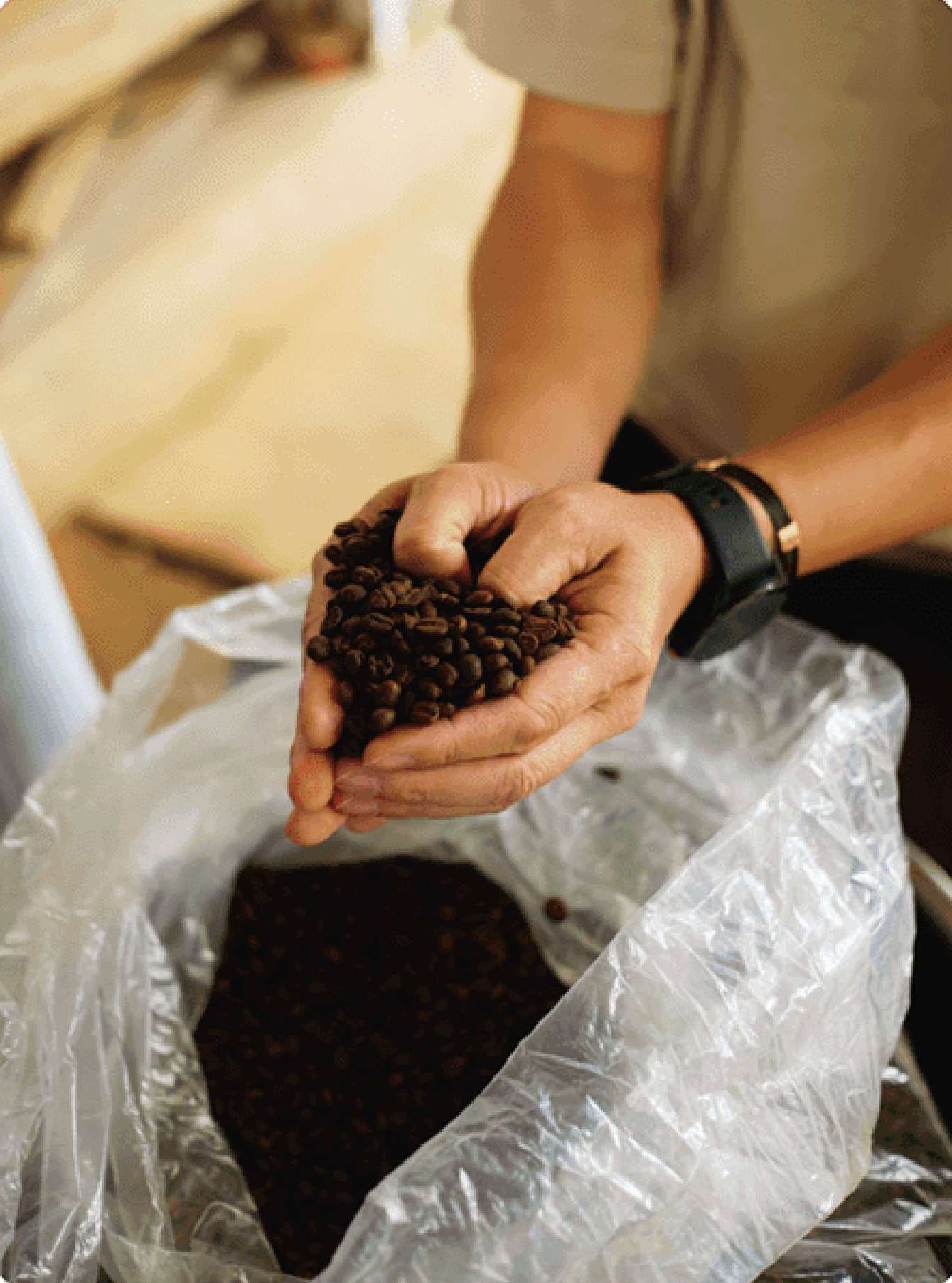
Roasting is a carefully controlled heating process, usually lasting somewhere between eight and fifteen minutes in a commercial roaster. As the beans heat up, they go through several stages:
- Drying. Moisture inside the beans evaporates, and they turn from green to yellow.
- Browning. Sugars and amino acids react in what's known as the Maillard reaction, while sugars also begin to caramelise. The beans turn brown and start to smell like toasted bread and caramel.
- First crack. Around 196°C, steam and gas build up inside the beans until they crack open with a sound like popcorn. This marks the point where coffee becomes properly drinkable, and light roasts finish here.
- Development. After first crack, the roaster decides how far to go. Every extra minute changes the balance of acidity, sweetness and bitterness.
- Second crack. Around 224°C, a second, quieter crackle begins as the bean structure breaks down further and oils move to the surface. Dark roasts reach this stage or beyond.
Throughout the roast, beans also lose weight as moisture escapes, and they expand in size, becoming lighter and more porous.
Light roast
Light roasts are taken out of the roaster at or shortly after first crack. The beans are light brown with a dry, matte surface.
What they taste like: bright, lively acidity and delicate flavours that often resemble fruit, flowers, citrus or tea. Light roasts let the origin of the coffee shine through, so you can taste the influence of the variety, the soil and the processing method.
Body: lighter and more tea-like.
Best for: pour-over, filter coffee and other methods that highlight clarity. Light roasts are popular with specialty coffee drinkers who enjoy exploring different origins.
Medium roast
Medium roasts are developed further, finishing somewhere between first and second crack. The beans are a richer brown, still mostly dry on the surface.
What they taste like: a balance of acidity and sweetness, with flavours of caramel, milk chocolate, nuts and ripe fruit. Medium roasts are approachable, rounded and easy to love.
Body: medium and smooth.
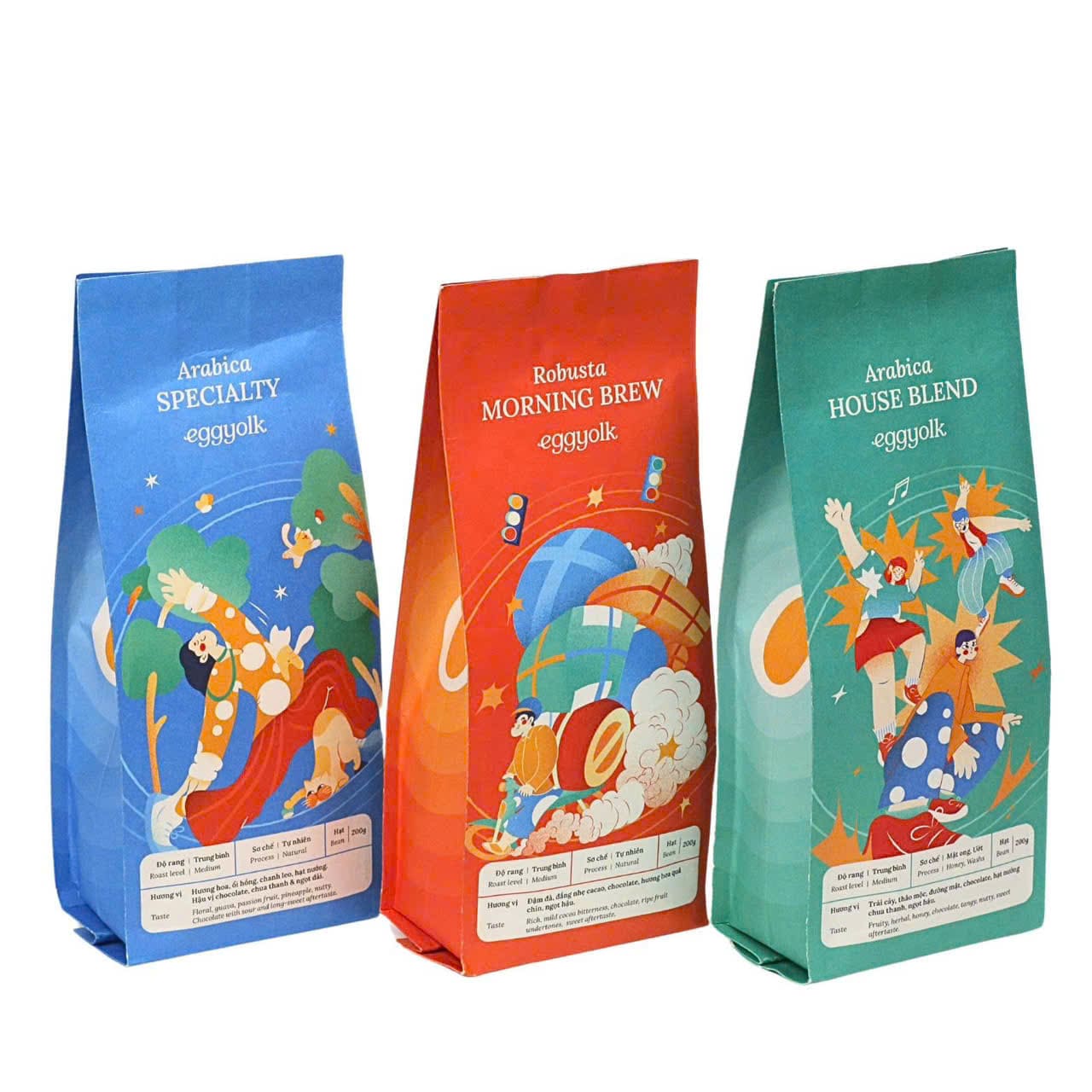
Best for: almost everything. Medium roasts work beautifully in drip coffee, espresso, French press and phin. All three of our Eggyolk roasted beans, the Arabica Specialty, Robusta Morning Brew and Arabica House Blend, are medium roasts, chosen to keep their fruity character while adding sweetness and balance.
Dark roast
Dark roasts are taken into or beyond second crack. The beans are deep brown to almost black, often with a shiny, oily surface.
What they taste like: bold, bittersweet and roasty, with flavours of dark chocolate, molasses, toasted nuts and sometimes smoke. Acidity is low, and the roast character becomes more prominent than the origin.
Body: heavy and syrupy.
Best for: espresso, milk drinks and Vietnamese phin coffee with condensed milk, where a bold flavour is needed to cut through sweetness and milk.
Roast names you might see
Coffee labels don't always say "light", "medium" or "dark". You might also come across traditional names, which loosely map onto the same scale:
- Cinnamon and New England roasts are very light, taken out around first crack.
- City and City+ roasts sit in the light-to-medium range.
- Full City roast is a medium-dark roast, just before second crack.
- Vienna, French and Italian roasts are progressively darker, with Italian among the darkest of all.
Many modern roasters simply describe coffee as a filter roast (lighter, for brewing methods like pour-over) or an espresso roast (a little darker, to balance under pressure and with milk). These names aren't standardised, so one roaster's "medium" may be another's "medium-dark". The tasting notes on the bag are often a more reliable guide than the roast name alone.
Does dark roast have more caffeine?
This is one of coffee's most persistent myths. Many people assume dark roasts are "stronger" in caffeine because they taste stronger. In reality, caffeine is quite stable during roasting, so the difference between roast levels is small.
There is a small twist. Dark roasted beans are less dense because they've lost more mass, so if you measure coffee by the scoop rather than by weight, a scoop of light roast can contain slightly more coffee, and therefore slightly more caffeine. Either way, the difference is minor. The species matters far more: Robusta contains much more caffeine than Arabica, whatever the roast.
Roasting in the Vietnamese tradition
Traditional Vietnamese coffee has long been roasted dark. Some roasters add ingredients such as butter or sugar during roasting, which coats the beans and gives them a glossy finish, a caramelised aroma and an extra-rich flavour. This style pairs perfectly with the slow drip of a phin and a spoonful of condensed milk. Today, alongside these classic roasts, many Vietnamese roasters also offer lighter and medium roasts that showcase the country's Arabica and fine Robusta.
Freshness matters as much as roast level
Whatever roast you choose, freshness makes a big difference. Freshly roasted coffee releases carbon dioxide for several days, so many roasters suggest resting beans for a few days before brewing. After that, coffee is generally at its best within a few weeks of the roast date. Look for a roast date on the bag, buy amounts you'll finish within a few weeks, and store beans in an airtight container away from heat, light and moisture.
There's no right or wrong roast, only the one you enjoy most. Try a light, medium and dark coffee side by side, brewed the same way, and let your taste buds decide.